Living with an unpredictable digestive system is exhausting. One day you feel fine; the next, you’re cancelling plans because of bloating, cramping, or a frantic dash to the nearest bathroom. If this sounds familiar, you’re not alone Irritable Bowel Syndrome (IBS) affects an estimated 10–15% of the global population, making it one of the most common gastrointestinal disorders in the world.
Yet despite how prevalent it is, IBS remains widely misunderstood by the public, and sometimes even in clinical settings. People wait years for a diagnosis, try elimination diets that don’t work, and feel embarrassed discussing symptoms that are, frankly, hard to bring up at a dinner table.
This guide cuts through the confusion. Whether you’ve just been diagnosed, suspect you might have IBS, or are simply trying to understand your gut better, you’ll find clear, actionable information here covering everything from what IBS actually is, to how it’s diagnosed, managed, and lived with day to day.
What Is IBS? Understanding the Basics
Defining Irritable Bowel Syndrome
Irritable Bowel Syndrome is a functional gastrointestinal disorder meaning the digestive system looks structurally normal on scans and tests, but doesn’t function the way it should. There’s no visible inflammation, no ulcers, no tissue damage. Instead, the problem lies in how the gut and brain communicate.
IBS is characterised by a cluster of symptoms: recurring abdominal pain, changes in bowel habits (diarrhoea, constipation, or both), and bloating all without another identifiable cause. Symptoms must be present for at least six months and recurring at least one day per week in the last three months to meet the clinical Rome IV diagnostic criteria.
The Different Types of IBS
Doctors classify IBS into subtypes based on the predominant bowel habit:
- IBS-D (Diarrhoea-predominant): Loose, watery stools are the main complaint. Urgency is common and distressing.
- IBS-C (Constipation-predominant): Hard, infrequent stools that are difficult to pass.
- IBS-M (Mixed): A cycle of both diarrhoea and constipation, often alternating.
- IBS-U (Unclassified): Symptoms don’t fit neatly into the other categories.
Understanding your subtype matters because treatments and dietary strategies differ significantly between them.
How Common Is IBS, Really?
IBS is one of the most-diagnosed gastrointestinal conditions worldwide. It’s more prevalent in women than men, and typically first appears before the age of 50, though it can develop at any stage of life. It accounts for a significant proportion of referrals to gastroenterologists and has a measurable impact on quality of life, work productivity, and mental health.
Recognising the Symptoms: What Does IBS Feel Like?
Core Symptoms to Watch For
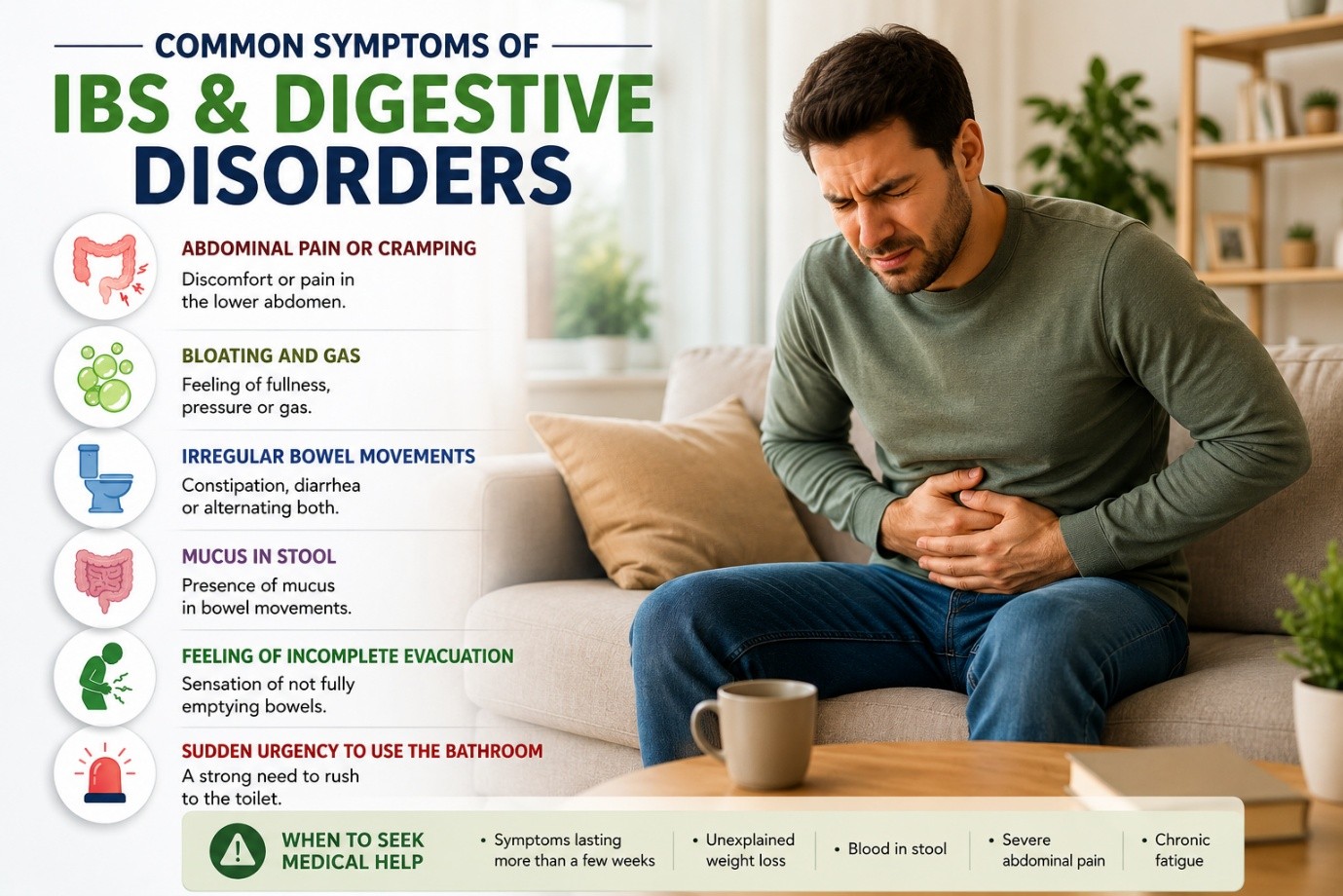
The hallmark symptoms of IBS include:
- Abdominal pain or cramping : often relieved after a bowel movement
- Bloating and distension : a feeling of fullness or visible swelling in the belly
- Changes in stool consistency : too loose, too hard, or varying
- Changes in stool frequency : going too often or not nearly enough
- Urgency : a sudden, pressing need to use the bathroom
- Feeling of incomplete evacuation : the sense that you haven’t fully emptied
Symptoms That Are Not Typical of IBS
Some symptoms should raise a red flag and prompt urgent investigation, as they may indicate something more serious:
- Rectal bleeding
- Unexplained weight loss
- Fever
- Symptoms waking you from sleep
- Family history of colorectal cancer or inflammatory bowel disease (IBD)
These are not IBS symptoms. If you experience any of them, see a doctor promptly.
A Practical Example: Sarah’s Story
Sarah, a 34-year-old marketing professional, had been struggling with stomach cramps and unpredictable bowel habits for two years. She’d dismissed it as “just stress,” avoided social events involving food, and quietly stocked up on antidiarrhoeal tablets. After finally speaking to her GP, she was referred to a gastroenterologist who ruled out coeliac disease and IBD through blood tests and a colonoscopy. Her diagnosis? IBS-D. Armed with that knowledge, she began a structured FODMAP elimination diet with a dietitian — and within eight weeks, had her symptoms largely under control.
The lesson: symptoms that disrupt your life aren’t something to push through silently. Getting a proper diagnosis is the first step.
What Causes IBS? The Science Behind the Symptoms
The Gut-Brain Axis
IBS is fundamentally a disorder of the gut-brain axis the two-way communication network linking your central nervous system and your enteric nervous system (the “second brain” in your gut). In people with IBS, this communication becomes dysregulated. Pain signals are amplified (a phenomenon called visceral hypersensitivity), and gut motility — the muscle contractions that move food through your system becomes erratic.
Known Triggers and Contributing Factors
While the exact cause of IBS isn’t fully understood, research has identified several contributing factors:
- Post-infectious IBS: IBS can develop after a bout of gastroenteritis. Up to 25% of people who contract a gut infection go on to develop IBS.
- Gut microbiome imbalances: Alterations in the composition of intestinal bacteria (dysbiosis) appear to play a role.
- Psychological factors: Anxiety, depression, and chronic stress don’t cause IBS, but they significantly influence its severity. The gut and brain are in constant conversation.
- Diet and lifestyle: Certain foods, irregular eating patterns, and lack of sleep can all trigger or worsen symptoms.
- Hormonal factors: Many women report that symptoms worsen around menstruation, suggesting a hormonal link.
Getting a Diagnosis: What to Expect at the Doctor
Why Diagnosis Takes Time
IBS is a diagnosis of exclusion meaning doctors first need to rule out other conditions before confirming it. There’s no single test that detects IBS. This process can feel frustrating, but it’s clinically necessary.
Tests Your Doctor May Order
Depending on your symptoms and history, investigations may include:
- Full blood count and CRP : to check for signs of inflammation or infection
- Coeliac antibody test : coeliac disease shares many symptoms with IBS
- Stool tests : including a faecal calprotectin test to rule out IBD
- Thyroid function tests : an underactive thyroid can mimic IBS-C
- Colonoscopy or sigmoidoscopy : particularly if you’re over 45 or have red-flag symptoms
If all these come back normal and your symptom pattern fits, an IBS diagnosis can be made using the Rome IV criteria.
How to Get the Most From Your Appointment
Before your appointment, keep a symptom diary for two to four weeks. Log:
- What you ate and when
- When symptoms occurred and their severity
- Stress levels and sleep quality
- Any medications or supplements
This information is invaluable. Doctors can spot patterns in minutes that might take you months to notice on your own.
Managing IBS: Treatment Options That Actually Work
Dietary Approaches
The Low-FODMAP Diet is currently the most evidence-backed dietary intervention for IBS. FODMAPs are fermentable carbohydrates found in many common foods things like onions, garlic, wheat, certain fruits, and dairy. In susceptible individuals, these compounds ferment rapidly in the gut, drawing in water and producing gas, which triggers symptoms.
The diet works in three phases:
- Elimination : all high-FODMAP foods removed for 4–6 weeks
- Reintroduction : foods tested one group at a time to identify personal triggers
- Personalisation : a long-term, balanced diet based on your individual tolerances
Importantly, this should be done with the guidance of a registered dietitian. Done incorrectly, it can lead to nutritional deficiencies and an unnecessarily restricted diet.
Other dietary strategies include:
- Eating at regular intervals and not skipping meals
- Reducing alcohol and caffeine
- Increasing soluble fibre (for IBS-C) or reducing insoluble fibre (for IBS-D)
- Staying well hydrated
Medications
Several medications can help manage specific IBS symptoms:
- Antispasmodics (e.g., mebeverine, hyoscine) — reduce cramping
- Laxatives (e.g., polyethylene glycol) — for IBS-C
- Loperamide — slows gut transit for IBS-D
- Low-dose antidepressants — tricyclics or SSRIs can help modulate gut-brain signalling and reduce pain
- Linaclotide or lubiprostone — newer agents for IBS-C with good evidence
Always discuss medication options with your doctor. What works for one subtype may worsen another.
Psychological and Mind-Body Therapies
Given the gut-brain connection, psychological therapies are highly effective for IBS and shouldn’t be dismissed as a last resort:
- Cognitive Behavioural Therapy (CBT): The most researched psychological treatment for IBS, with strong evidence for reducing symptom severity.
- Gut-directed hypnotherapy: A specialised form of hypnotherapy focused on the digestive system, with response rates of up to 70% in some studies.
- Mindfulness-based stress reduction (MBSR): Helps people manage anxiety around symptoms and break the stress-symptom cycle.
Lifestyle Modifications
Small, consistent changes add up:
- Regular moderate exercise — even a daily 30-minute walk can meaningfully improve bowel regularity and reduce bloating
- Prioritising sleep — poor sleep heightens pain sensitivity and gut reactivity
- Stress management — yoga, breathing exercises, journalling, or therapy
- Probiotic supplements — evidence is mixed, but certain strains (particularly Bifidobacterium and Lactobacillus) show modest benefit in some people
IBS and Mental Health: The Overlooked Connection
IBS and mental health conditions are deeply intertwined. Studies show that up to 60% of IBS patients have comorbid anxiety or depression. But the relationship isn’t simply that stress “causes” IBS it’s bidirectional. Chronic gut symptoms cause psychological distress, and psychological distress amplifies gut symptoms.
This cycle can feel impossible to break. The fear of unpredictable symptoms leads to avoidance behaviour, social isolation, and reduced quality of life which increases anxiety, which worsens IBS.
Recognising this link is essential to effective management. Treating IBS as a purely physical condition, while ignoring the mental health component, leads to incomplete recovery. The most successful treatment approaches address both simultaneously.
If you’re struggling with anxiety or low mood alongside your IBS, tell your doctor. You’re not being dramatic — you’re describing a well-documented clinical reality.
FAQs
1. Is IBS a serious disease?
IBS is not life-threatening, but it can significantly affect quality of life if not managed properly.
2. Can IBS be cured permanently?
There is no permanent cure, but symptoms can be controlled effectively with diet, lifestyle changes, and medical support.
3. What foods should I avoid with IBS?
Common triggers include spicy foods, fried foods, caffeine, alcohol, dairy, and artificial sweeteners.
4. How is IBS diagnosed?
IBS is diagnosed through symptom evaluation and by ruling out other conditions using tests like blood work, stool tests, or colonoscopy if necessary.
5. Can stress really cause IBS symptoms?
Yes, stress is one of the biggest triggers and can worsen gut sensitivity and bowel irregularities.
6. When should I get a health check-up for digestive issues?
If symptoms persist for more than a few weeks, or if they interfere with daily life, a health check-up is strongly recommended.
IBS and digestive health issues are increasingly common due to modern lifestyle factors such as stress, poor diet, and irregular routines. While IBS is not dangerous, it can be uncomfortable and disruptive if left unmanaged.
The good news is that with the right diagnosis, lifestyle changes, and medical guidance, most people can significantly reduce symptoms and improve their quality of life.
Regular health check-ups are essential for identifying the root cause of digestive issues and ensuring long-term wellness. If you experience ongoing symptoms, seeking professional advice early can make a major difference.
For personalized evaluation and digestive health support, consider visiting a trusted healthcare provider like Royal Phoenix Clinic, where comprehensive check-ups and patient-focused care can help you take control of your gut health.